
On this page
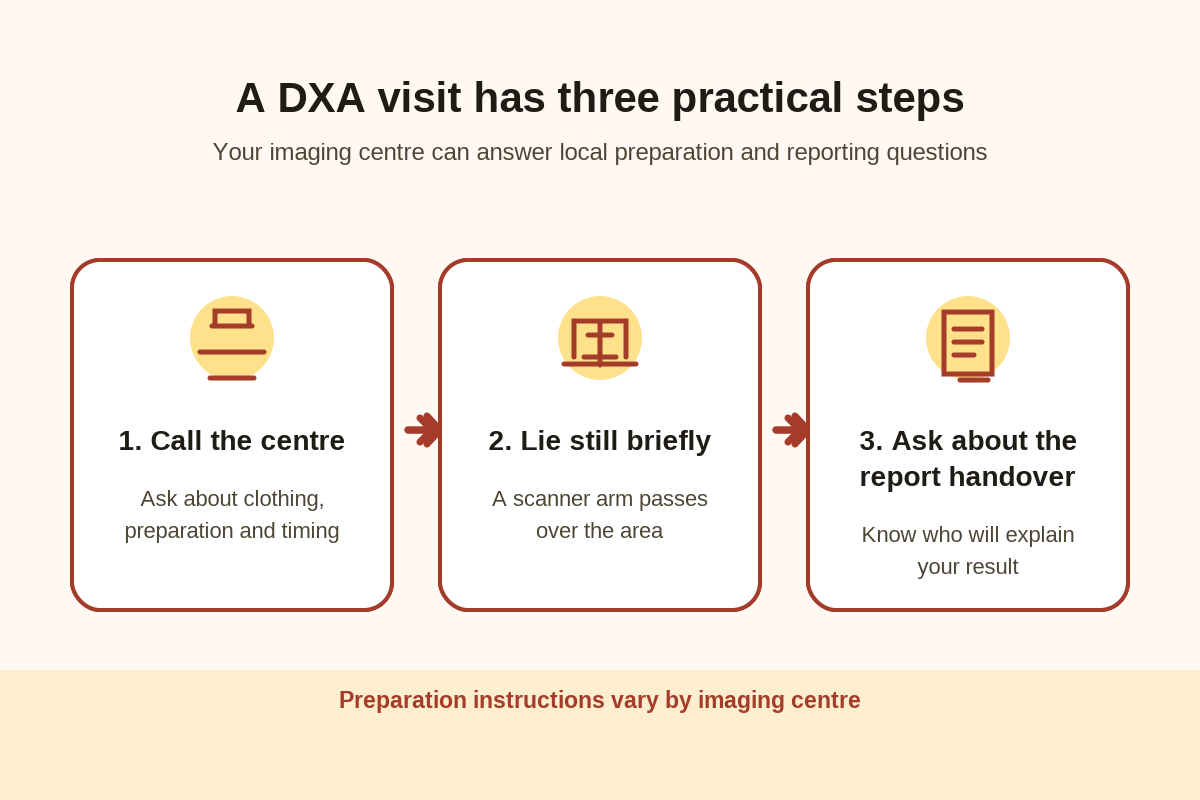
The short answer: A central DXA (also written DEXA) scan is a low-dose X-ray measurement of bone density. For many scans, you lie on a padded table while a scanner arm moves over your hip and lower spine. The imaging centre will give you its own arrival and clothing instructions. Ask how to prepare, what body area is planned, when and how you will receive the report, and whom to contact with questions.
This page describes the appointment after a scan has been arranged. It does not decide whether you need a scan, interpret a result, or recommend treatment. The exact equipment, positioning and workflow can vary between centres and according to the type of scan ordered.
What does DXA measure?
DXA stands for dual-energy X-ray absorptiometry. A central DXA scan uses two low-dose X-ray beams to estimate bone mineral density, commonly at the hip and lower spine. It is different from a routine X-ray image: the machine measures how much of the beams pass through bone and soft tissue, then calculates a density measurement. The NHS explains the scan and its low-dose X-rays; the U.S. National Library of Medicine’s MedlinePlus guide describes the measurement in more detail.
Some facilities offer a peripheral scan that measures a smaller area such as the wrist or heel. That is not the same examination as a central scan of the hip and spine. If your booking confirmation simply says “bone density,” call the centre and ask which type and body area have been scheduled. The answer can help you know what to expect without changing the clinician’s reason for ordering it.
Before you go
Follow the instructions from the facility that booked your scan. Do not assume that every Indian imaging centre has the same preparation rules. Many standard central DXA appointments need little preparation, but the centre’s instructions take priority. Ask whether to avoid calcium supplements or other products before the scan and for how long; do not stop prescribed medicine unless the prescribing clinician or centre specifically instructs you to do so. If you were not given instructions, call rather than guessing.
Ask what clothes are easiest. Metal zips, hooks, belts, jewellery or fasteners can interfere with imaging, and a facility may ask you to change into a gown. Comfortable clothing without metal can be useful, but do not travel in a way that conflicts with the centre’s instructions. Take the referral or booking information, previous relevant reports if requested, and any documents the imaging centre says it needs. You can call ahead about accessibility, assistance, language, and whether a companion may accompany you.
Tell the centre before the appointment if you may be pregnant, have had a recent imaging examination using contrast material, or have a metal implant in or near the area to be scanned. Do not cancel on your own based on this list. The radiology team can advise whether the timing or scan setup needs to change. DXA uses X-rays, so the centre and referring clinician can address your own circumstances.
For a simple preparation checklist, write down four items: the appointment time and location; the centre’s clothing or supplement instructions; the documents to bring; and the expected route for receiving the report. If you need clarification, keep the name of the person or department you spoke with. Yellow’s test-request question sheet can help you record the purpose of a requested test and who will explain its result. It does not recommend a scan.
What happens at the imaging centre?
The radiographer or imaging staff member may confirm your name, date of birth, referral and the body area to be scanned. They may ask about metal implants, recent contrast imaging, or pregnancy possibility. You can tell them if you are uncomfortable lying flat or need help moving onto the table. Ask questions before the scan begins; you can request a pause if you need one.
For a central scan, you usually lie on your back on an open, padded table. Depending on the area, a support may be placed under or around your legs. The scanner arm passes above you without enclosing you. You will be asked to stay still so movement does not blur the measurement. The staff member operates the equipment and may adjust your position to image the hip, spine, or another requested site. The NHS description of the procedure says the scan commonly takes about 10 to 20 minutes; timing at a particular centre can differ, so ask when you book.
The scan itself should not involve an injection or a tunnel-like machine. Tell staff if you feel unwell or cannot maintain a position. They can explain what adjustments are possible. A peripheral scan uses a different device and may involve placing a hand, wrist, or foot in a scanner. Check which procedure is planned if the appointment details do not specify it.
After the scan: report and next conversation
Ask when the report will be ready, whether it will go to the referring clinician, and how you can obtain a copy. Also ask whom to contact if you do not receive it by the expected date. A scan measures bone density at the sites examined. The report is one part of the clinical picture; a practitioner considers why the scan was requested, relevant history and other findings when discussing what it means. This guide does not explain personal T-scores or Z-scores and cannot tell you whether a value is normal for you.
If the report uses terms you do not understand, mark the exact line and ask the referring practitioner to explain it. Questions might include: Which site was measured? What does this finding mean in the context of why the scan was ordered? Is any follow-up needed, and who will arrange it? When should I expect to hear from you? Yellow’s appointment preparation guide can help you keep those questions together. Avoid making medication or supplement changes based only on a number in a report.
Does everyone need a DXA scan after menopause?
No. A menopause stage or age by itself does not tell this page whether an individual needs a scan. Health systems use different criteria and recommendations depend on the clinical context. NHS eligibility information is written for the UK and should not be transferred as an Indian rule. The Ministry of Health and Family Welfare’s osteoporosis guideline is an Indian clinical reference, but a clinician applies it alongside a person’s history and local practice. This article is about the procedure, not a screening threshold or a personal indication.
If a scan has been proposed, it is reasonable to ask the practitioner what question the result is meant to answer, which site will be measured, how the report will affect the next discussion, and whether there are alternatives or timing considerations. Those questions support shared understanding without treating a scan as universally necessary. If a centre offers additional tests or packages, ask which clinician requested each item and how results will be reviewed. Do not assume that an add-on is required because it appears in a package.
A note about radiation and safety
DXA uses ionising radiation at a low dose. The NHS describes the dose as much lower than standard X-rays. The amount depends on the equipment and scan. Staff can explain the equipment at your centre and the precautions that apply. If you may be pregnant, tell them before the scan so they can advise you. Do not rely on a general web page to decide whether to attend or postpone a booked examination.
Frequently asked questions
Is DXA the same as a regular X-ray?
No. Both use X-rays, but DXA uses two low-dose beams to calculate bone mineral density at specified sites. A regular X-ray creates an image for a different clinical purpose. The imaging staff can confirm whether your booking is for central DXA or another type of bone-density measurement.
Do I need to fast before a DXA scan?
Do not assume you need to fast. Preparation can vary by facility and by the type of examination. Follow the instructions from your imaging centre. If the centre did not give you any, call and ask whether food, supplements, medicines or clothing need special attention before travelling.
What should I wear to a DXA appointment?
Ask the centre. Clothing without metal fasteners may make positioning easier, and you may be asked to change into a gown. Leave jewellery or belts with metal at home if convenient, but follow the specific instructions you were given. You do not need to stop prescribed medicines unless a qualified professional tells you to.
Can I have a DXA scan if I might be pregnant?
Tell the imaging centre before the scan if pregnancy is possible. DXA uses X-rays, so the staff need to advise you about your specific appointment. Do not cancel or proceed based only on general online information; contact the centre or referring clinician for instructions.
How long does a DXA scan take?
The scan itself often takes around 10 to 20 minutes for a central DXA, although local timing and appointment length vary. Arrival checks, changing clothes or waiting can add time. Ask the facility how early to arrive and how long to allow for the whole visit.
When will I get my DXA result?
The timing and delivery route depend on the facility and the person who requested the scan. Ask whether the report goes directly to your practitioner, when you can expect it, and how to request a copy. Arrange a follow-up conversation so the result is explained in the context of your reason for having the scan.
Sources and further reading
This resource provides general information and does not diagnose a condition or replace advice from a qualified practitioner.