
On this page
The short answer: Persistent itching, soreness or a change in vulvar skin colour or texture deserves an assessment, because several conditions can look or feel similar. Lichen sclerosus is one possible skin condition, and it is more common after menopause, but symptoms alone cannot identify it. A practitioner can ask about the pattern, examine the area with your consent and decide whether more assessment is needed. You do not have to name the condition before asking for help.
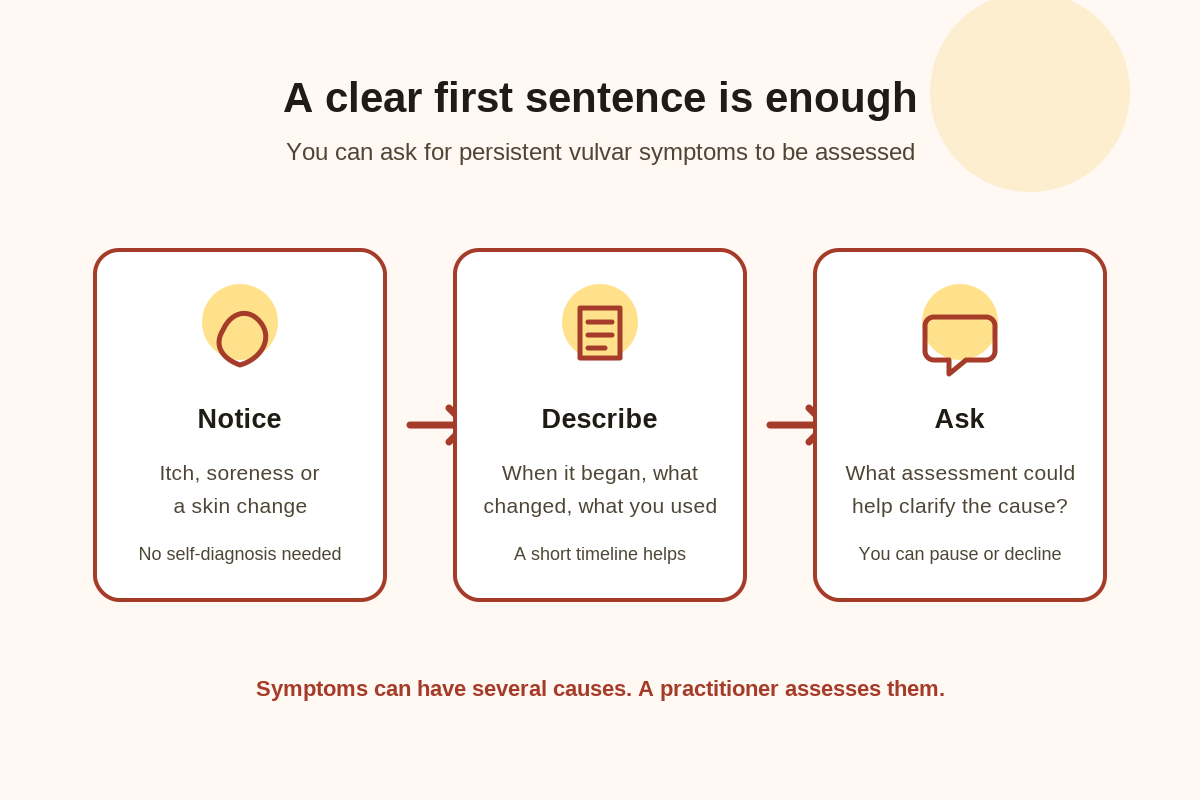
You can start with: “The skin around my vulva has been itchy and has changed. I would like it checked.”
This guide explains why persistent symptoms are worth discussing and what a practitioner may ask. It does not diagnose lichen sclerosus, recommend a cream or tell you how to treat the skin yourself. For broader vaginal dryness questions, see Yellow’s guide to a private appointment conversation. Dryness and external skin symptoms can overlap, but they do not always have the same cause.
What is lichen sclerosus?
Lichen sclerosus is an inflammatory skin condition that often affects genital skin. It can occur at different ages, including after menopause, and its cause is not fully understood. It may involve itching, soreness or patches that look different, but these features cannot diagnose it.
Vulvar symptoms can come from more than one condition. An online photo search cannot show which explanation fits your skin. A matching picture does not prove a diagnosis.
Lichen sclerosus is one of several conditions that can affect the vulva. Irritation, dermatitis, lichen planus and other skin conditions can cause itching or soreness too. Vaginal dryness or tissue changes can also affect the area around the opening. The possibilities overlap. That is why a practitioner needs to hear your history and may need to examine the skin rather than infer the cause from one symptom.
Why should you arrange an assessment?
If itching or soreness keeps returning, the skin looks or feels different, or a sore area is not healing, contact a qualified health practitioner and explain what you noticed.
An assessment can help distinguish a skin condition from irritation, infection or another cause. The NHS advises seeing a general practitioner for an itchy genital patch. In India, ask a general practitioner, gynaecologist or dermatologist whether they assess vulvar skin concerns and where to go if they do not.
You can ask for an explanation before an examination, request a female practitioner if available, ask whether a chaperone can be present, and pause or decline. If language or privacy is a concern, mention it while booking.
What might the practitioner ask?
The practitioner may ask when the symptom began, whether it comes and goes, and about pain, bleeding, sores or a skin change. They may ask whether it affects urination, bowel movements or sex. If you are unsure about a date, say so rather than guessing.
They may ask about soaps, detergents, sanitary products, creams, medicines, allergies or other skin conditions. The question is not a judgment about cleanliness. These details help them consider possible causes.
Before the appointment, write down the first time you noticed the change and a recent example. Note any product or medicine you have already used, including whether it helped or caused more irritation. If you have photographs from different dates, ask whether the practitioner can review them and how to share them securely. You do not need to take or send photographs if you do not want to. The clinician can explain other ways to assess the area.
You might say: “It began about three weeks ago. The itch is worse after exercise, and I have noticed a small area that looks different.” Mention pain, bleeding, an open sore or a new lump near the start.
What can an examination involve?
The practitioner may first ask questions. If looking at the skin would help, they should explain what they plan to do and ask your consent. Ask who will be in the room or whether a chaperone is available. You can ask them to stop at any point.
The examination may be limited to external skin. If another examination is recommended, ask why and what information it would add. You decide whether to proceed.
History and examination may be enough for an experienced clinician. If the appearance is uncertain or another concern needs checking, they may discuss a skin biopsy or referral. A biopsy is a small sample examined in a laboratory. It is not needed for every person with itching; the clinician should explain why it may help.
Swabs or blood tests are not automatic. If one is suggested, ask what it is meant to answer, when you will receive the result and who will explain it. If you are referred, ask which specialist and what records to take.
What should you ask about next steps?
Try these questions if they fit your visit:
- What possible causes are you considering?
- What did you observe, and what remains uncertain?
- Do you recommend an examination, test or referral? Why?
- What changes should prompt me to contact you sooner?
- When should I expect to hear about a result or follow-up?
- Who should I contact if the symptoms persist or worsen?
Ask the practitioner to write down what they suspect, what remains uncertain and the next step. Ask them to explain unfamiliar terms. Do not change a prescribed medicine without speaking to the person who prescribed it.
If you tried an over-the-counter product, bring its name. Products for other kinds of itch may not suit vulvar skin. This article does not recommend a treatment.
Keep a note of the appointment date, the practitioner’s name, any test or referral discussed and the follow-up contact. Yellow’s appointment preparation guide can help you organise questions. The observation notes resource can help you describe a change over time without turning it into a diagnosis.
When should you contact a practitioner again?
Contact the service if symptoms persist, change or worsen, or if the agreed next step is unclear. Ask who will explain a test result. The NHS advises assessment for a new lump, thickened area or ulcer that does not heal. These signs do not establish a cause, but are worth mentioning.
If you have severe pain, heavy bleeding or feel acutely unwell, seek urgent local care rather than waiting for a routine appointment. For other persistent concerns, you can start with a qualified practitioner who can examine you and arrange further assessment if needed. You do not need to decide whether the cause is menopause, infection or a skin condition before you make the appointment.
Medical information here is independent of any paid programme. Yellow can help you prepare questions and keep track of what you want to ask; the practitioner assesses symptoms and decides on clinical care. The next step is a clear description of what changed and a conversation about the assessment that makes sense for you.
Frequently asked questions
Does vulvar itching after menopause mean lichen sclerosus?
No. Lichen sclerosus is one possible cause, but irritation, dermatitis, infections and other conditions can also cause itching or soreness. Symptoms alone cannot identify the cause. A qualified practitioner can ask about the pattern and examine the skin if needed. Mention persistent symptoms and any visible or felt change.
Is lichen sclerosus only a condition after menopause?
No. It can occur at different ages, including in children, but public health and clinical sources describe it as more common among older or postmenopausal women. Age alone cannot confirm or rule it out. Persistent vulvar itching, soreness or skin changes deserve an assessment regardless of age.
Will I need a biopsy for vulvar skin changes?
Not necessarily. A practitioner may be able to assess the skin from the history and examination. A biopsy may be discussed when the diagnosis is uncertain or another finding needs checking. The clinician decides whether it is useful in your situation and should explain the reason and process before asking for your consent.
Can I use a cream for itching before I see a doctor?
This article cannot recommend a cream because several conditions can cause similar symptoms and treatments differ. Tell the practitioner about products you have already used, including anything that made the area feel worse. Ask what is safe to use while you wait for an assessment rather than starting a prescription product on your own.
Which doctor should I see for persistent vulvar itching in India?
Local access varies. You can ask a general practitioner, gynaecologist or dermatologist whether they assess vulvar skin concerns. If the first practitioner does not provide that assessment, ask where they recommend you go and whether you need a referral. The right starting point depends on the services available near you.
What should I tell the doctor about a vulvar skin change?
Describe when it started, whether it comes and goes, what it feels like and what you can see or feel. Mention any sore, bleeding, lump or thickened area, and list products or medicines you have tried. You do not need to know the medical name. A short timeline is enough to begin the discussion.
This article is general information, not a diagnosis or treatment plan. Persistent vulvar itching, soreness, a skin change or a sore that does not heal should be discussed with a qualified health practitioner.
Sources and further reading
- NHS, Lichen sclerosus, reviewed 9 December 2024
- De Luca et al., Lichen sclerosus: The 2023 update, Frontiers in Medicine, 2023
- Krapf et al., Vulvar lichen sclerosus: Current perspectives, International Journal of Women's Health, 2020
- Simonetta et al., Vulvar dermatoses: A review and update, Missouri Medicine, 2015
- Schlosser and Mirowski, Lichen sclerosus and lichen planus in women and girls, Clinical Obstetrics and Gynecology, 2015
This resource provides general information and does not diagnose a condition or replace advice from a qualified practitioner.